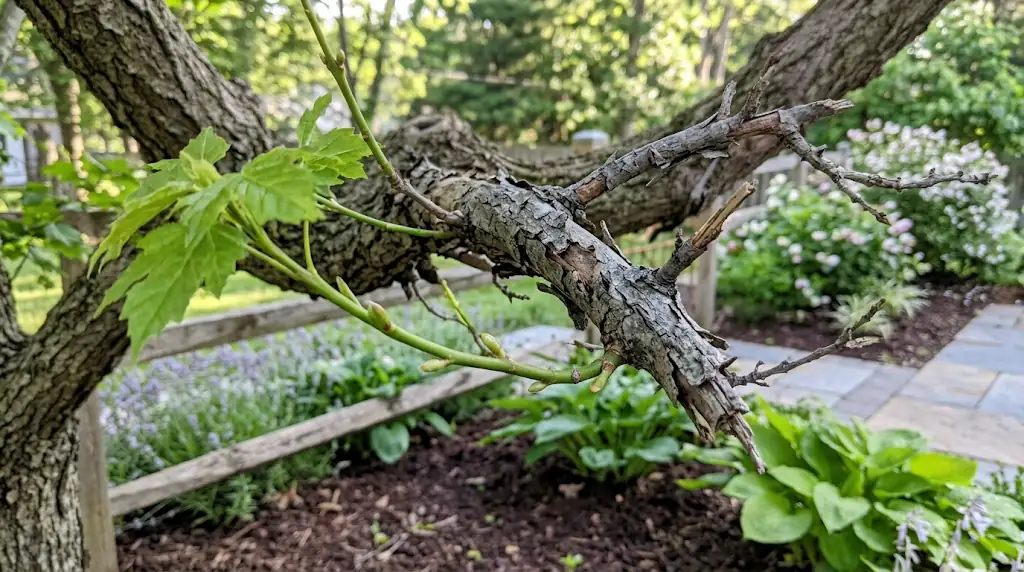
To determine if a tree is dead or sick, perform a scratch test on young twigs to check for green cambium tissue beneath the bark, and inspect the canopy for flexible live buds. A tree is generally dead if branches snap cleanly throughout the canopy, the trunk sheds bark in large plates without new tissue beneath, or wood-decay fungal conks sprout around the root collar.
Central Indiana trees face relentless stress from heavy clay soils, erratic freeze-thaw cycles, summer droughts, and invasive pests. Distinguishing between a treatable illness and structural death helps Carmel homeowners take action—either rehabilitating the canopy before it declines further or removing a hazardous tree before strong winds bring it down on a roof, vehicle, or fence.
The Diagnostic Breakdown: Dead vs. Sick Trees
Use this comparison table to evaluate the symptoms visible on your tree:
| Tree Feature | Sick / Treatable Condition | Dead / Irreversible Hazard |
| Twigs & Buds | Flexible twigs; green inner cambium under scratch test; buds intact. | Brittle, dry twigs that snap cleanly; dry, brown cambium layer; shriveled buds. |
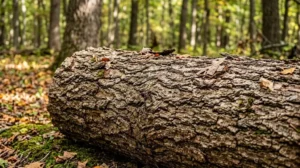
| Trunk & Bark | Minor vertical fissures; isolated sap seepage; intact, tight bark. | Deep structural trunk cracks; hollow cavities; hollow sounding trunk; bark peeling off in sheets. |
| Leaves / Canopy | Premature leaf drop, yellowing (chlorosis), or localized wilting. | Complete failure to leaf out in spring; brown, dead leaves adhering out of season. |
| Fungal Activity | Mild leaf spot, powdery mildew, or superficial needle cast. | Shelf-like bracket fungi (conks) or mushroom clusters on the trunk flare or root plate. |
| New Growth | Clustered sprouts along trunk branches (epicormic stress growth). | Zero active growth points; dry, desiccated vascular system throughout main stems. |
3 Simple Tests You Can Perform Yourself
You can assess the baseline health of your tree without specialized climbing gear using three non-invasive checks:
1. The Thumbnail Scratch Test
Locate several smaller, pencil-diameter twigs across different sections of the tree’s lower canopy. Use your thumbnail or a pocketknife to gently scrape back the thin outer layer of bark.
- Green and Moist: The cambium layer is alive and actively transporting fluids.
- Brown, Dry, and Brittle: The twig is dead. If this test yields dry, brittle brown wood across all sides of the tree, the canopy is non-viable.
2. The Branch Flexibility Check
Bend a small branch or twig gently between your fingers.
- A living branch bends smoothly into a curve due to internal cellular moisture.
- A dead branch snaps sharply under light pressure with an audible crack.
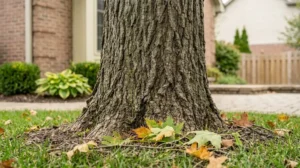
3. The Trunk Flare and Root Base Inspection
Clear away excess mulch and ground cover around the base of the trunk where it flares into the soil.
- Warning Signs: Look for fungal conks (woody, shelf-like mushrooms) growing directly out of the bark or root flare. These conks feed on rotting lignin and cellulose, indicating internal heartwood rot.
- Soil Shift: Inspect the soil on the opposite side of any noticeable lean. Cracked or mounded turf indicates that the root plate is failing and losing its structural anchor.
Common Causes of Tree Illness in Carmel
Central Indiana landscapes host a distinct set of fungal pathogens, environmental pressures, and insect infestations that mimic death but may respond to treatment:
- Anthracnose on Sycamores and Oaks: Common during cool, wet Indiana springs. Leaves curl, develop brown spots along veins, and drop early. While alarming, trees typically produce a secondary flush of healthy foliage by early summer without permanent structural harm.
- Iron Chlorosis in Pin Oaks: Carmel’s heavy, alkaline clay soils bind essential iron, preventing uptake. Leaves turn pale lime green or yellow while leaf veins stay dark green. Soil acidification and direct nutrient trunk injections easily reverse this issue.
- Emerald Ash Borer (EAB): While untreated EAB usually proves fatal to native ash trees, systemic trunk-injection treatments can save specimens that retain more than 50% of their healthy canopy. Watch for D-shaped exit holes, S-shaped larval galleries under split bark, and heavy woodpecker flecking.
- Rhizosphaera Needle Cast in Blue Spruce: Widely planted across Hamilton County subdivisions, Colorado Blue Spruces struggle in humid Indiana summers. Needles turn purple-brown and drop from the inside out. Targeted fungicide sprays and crown thinning can stabilize the tree.
When a Sick Tree Becomes a Removal Emergency
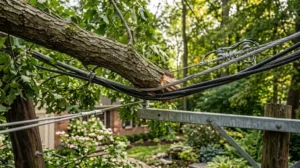
A sick tree can often be pruned, fertilized, or treated with systemic arborjet injections. However, structural instability transforms a declining tree into a severe liability.
Under City of Carmel Property Maintenance Codes, property owners are legally required to remove hazardous dead trees or dead limbs that threaten public rights-of-way, sidewalks, and neighboring parcels.
Schedule professional removal immediately if you observe:
- More Than 50% Canopy Loss: Deciduous trees that lose over half of their crown rarely regain structural balance or generate enough energy to survive long-term.
- Emerald Ash Borer Brittleness: Research from Purdue University Extension shows that ash trees killed by EAB lose internal moisture rapidly, making their wood brittle and prone to sudden structural failure during modest wind gusts.
- Trunk Cavities with Wood Rot: If internal decay spans more than one-third of the trunk’s diameter, the shell cannot reliably support the tree’s dynamic wind load.
- Co-Dominant Stem Splits: Trees with two competing main trunks that form a tight “V” crotch frequently develop included bark. When decay sets into the seam, the trunk can split in half under storm pressure.
Check Local Carmel Subdivision Rules Before Work
If you confirm that your tree is dead or dying and plan to remove it, keep these neighborhood requirements in mind:
- HOA Architectural Reviews: Neighborhoods like the Village of WestClay, Brookshire, and Crooked Stick often mandate photographic proof or a written statement from an ISA Certified Arborist confirming tree death before approving a removal application.
- Street Trees: If the dying tree is located in the lawn strip between the road curb and your sidewalk, it is managed by the city. Report the tree to the Carmel Urban Forestry Division for inspection and municipal removal.
Get a Professional Health Assessment for Your Carmel Trees
Misdiagnosing a tree can either cost you an otherwise salvageable landscape asset or leave a hazardous timber structure standing right above your house. A prompt on-site inspection by an experienced tree professional will clarify whether your tree needs crown pruning and therapeutic soil injections or safe, controlled takedown.
If you suspect a tree on your property is dead, dying, or structurally compromised, reach out to Carmel Tree Removal through our Contact Page to schedule a hazard evaluation today.