In Carmel, Indiana, homeowners do not need a municipal permit to remove a tree located entirely on private residential property. However, official authorization or prior approval is mandatory if the tree sits within a public street right-of-way, a recorded Tree Preservation Easement, or under Homeowners Association (HOA) architectural covenants.
Navigating municipal rules, property lines, and recorded subdivision plats can prevent costly code violations, HOA fines, and neighbor disputes. Before bringing out chainsaws and heavy rigging equipment, identify the precise legal status of the land where your tree stands.
Quick Reference: When You Do vs. Don’t Need Authorization
| Tree Scenario | Formal Permit or Approval Needed? | Governing Entity / Jurisdiction |
| Private Residential Yard (No Easement) | No | Property Owner (Autonomous) |
| Street Tree (Curb-to-Sidewalk Strip) | Yes | Carmel Urban Forestry Division |
| Tree Preservation Easement (TPE) | Yes | City of Carmel Department of Community Services |
| Drainage or Utility Easement (DU&E) | Conditional | Local Utilities / Hamilton County Surveyor |
| HOA-Governed Subdivision | Yes (Internal Approval) | HOA Architectural Review Board (ARB) |
| Commercial Property / Active Site Plan | Yes | Carmel Plan Commission / Planning & Zoning |
1. Private Residential Property (Unrestricted)
For standard single-family homes in Carmel:
- You have the legal right to remove, fell, or prune trees situated entirely within your boundary lines.
- The City of Carmel does not charge tree removal application fees or require arborist affidavits for standard backyard or private front-yard trees.
- You do not need to replace the tree unless dictated by neighborhood covenants.
Critical Exception: Check your property plat for recorded easements before beginning work. A tree that looks like it is in your yard may sit inside an official city or utility easement.
2. Street Trees and the Public Right-of-Way
The strip of lawn between the road curb and the pedestrian sidewalk is part of the public right-of-way. In Carmel, the municipality manages these zones to maintain canopy coverage under its long-standing Tree City USA standards.
- Homeowners cannot cut down right-of-way trees. The Carmel Urban Forestry Division, under the Department of Public Works, oversees all public street trees.
- Maintenance & Hazard Reports: If a street tree in front of your house is dying, dead, or dropping limbs, contact Carmel 311 or the Urban Forestry Division. City arborists will inspect the tree and handle the trimming or removal at municipal expense if deemed hazardous.
- Unauthorized Removal Penalties: Cutting down or topping a public right-of-way tree without city authorization can result in municipal citations and mandatory restitution costs to fund replacement plantings.
3. Tree Preservation Easements (TPE)
Many newer and master-planned subdivisions throughout Hamilton County feature designated Tree Preservation Easements (TPE) or Natural Conservation Areas platted along rear and side property lines.
- Legal Purpose: These easements protect mature forest canopy, natural buffer zones between developments, and sensitive wildlife corridors.
- Prohibited Actions: You cannot clear-cut, bulldoze, or remove healthy mature timber inside a designated TPE without explicit variance or administrative clearance from the Carmel Department of Community Services.
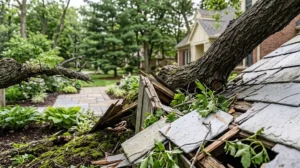
- Hazardous Exceptions: If a tree inside a TPE is dead, diseased, or poses an imminent threat to a permanent structure (such as your home or garage), removal is generally permitted. However, you must document the hazard with photographic evidence and a written assessment from an ISA Certified Arborist before cutting.
4. HOA Architectural Review Rules in Carmel
While the city code may not require a municipal permit, your Homeowners Association operates as a legally binding private contract. Carmel features dozens of prominent master-planned communities with strict landscaping regulations, including:
- The Village of WestClay
- Brookshire
- Crooked Stick
- Delaware Trace
- Claridge Farm
Most Carmel HOAs require homeowners to submit an Architectural Review Board (ARB) application before removing any live tree exceeding a specific trunk diameter (commonly 4 to 6 inches DBH—Diameter at Breast Height).
Common HOA Requirements:
- Application Submission: Provide site photos, a plot plan indicating the tree’s location, and the reason for removal.
- Arborist Assessment: Provide proof that the tree is dead, dying, diseased, or structurally compromised.
- Mandatory Replacement: Plant an approved canopy or ornamental species from the neighborhood’s recommended tree list within 30 to 90 days of removal.
Removing a tree without prior HOA approval frequently leads to fines and forced installation of mature replacement trees at the owner’s expense.
5. Utility Easements and Below-Grade Digging Laws
Trees planted over drainage tiles, gas lines, or buried electrical infrastructure present special legal obligations during removal operations.
Indiana 811 Call-Before-You-Dig Law
Felling a tree above ground does not require utility marking. However, stump grinding does.
Indiana state law requires homeowners and contractors to submit a locate request to Indiana 811 at least two full working days before any excavation or subsurface grinding begins. Grinding heads penetrate 6 to 18 inches below grade and can easily sever buried fiber optic lines, electric drops, or gas mains.
Overhead Utility Clearances
If tree branches grow within close proximity to primary high-voltage utility lines, private homeowners and non-certified tree trimmers should never attempt to cut them. Duke Energy maintains vegetation clearance schedules along distribution routes. Contact the utility provider directly to assess whether their line-clearance crews must prune or fell the tree safely before your contractor finishes yard cleanup.
Checklist: What to Do Before Removing a Tree in Carmel
Run through this four-step checklist before scheduling equipment on your property:
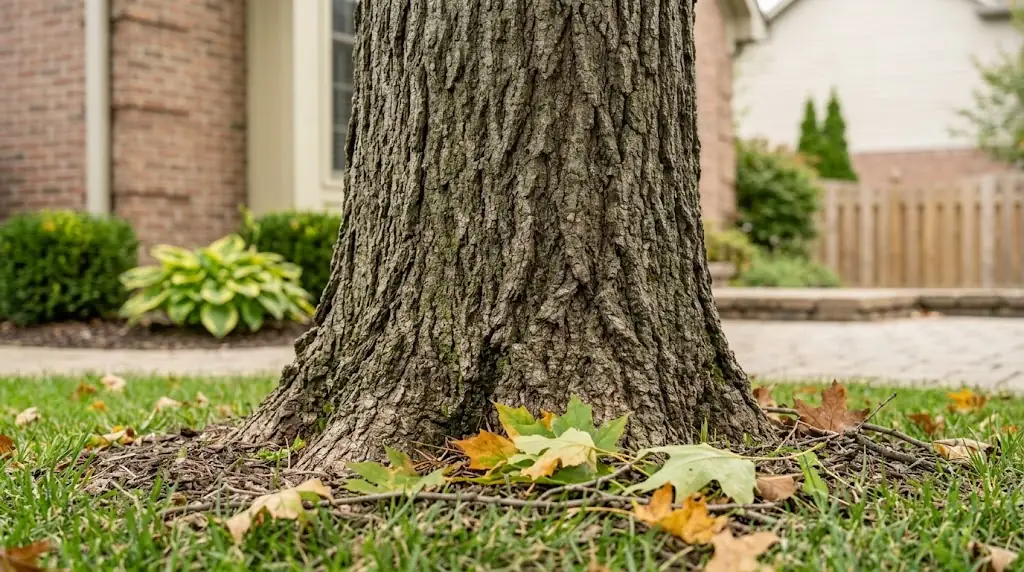
- Locate the Trunk Base: Confirm the tree trunk emerges entirely on your deeded property and outside the curb-to-sidewalk right-of-way.
- Review Your Property Survey: Check for recorded Tree Preservation Easements (TPE) or drainage restrictions on your specific lot.
- Check HOA Bylaws: If you live in an HOA-managed neighborhood, review the covenants and submit an architectural request form if required.
- Schedule 811 Locates for Stumps: Ensure your tree contractor submits an Indiana 811 ticket before bringing stump grinders onto the lawn.
Hire an Insured Carmel Tree Service
Handling tree removals in compliance with local regulations protects both your wallet and your property values. Working with an experienced local tree team ensures that property boundaries, utility lines, and neighborhood standards are respected from setup through final cleanup.
If you have questions about a hazardous, dead, or encroaching tree on your Carmel property, reach out to Carmel Tree Removal via our Contact Page to schedule a professional on-site tree assessment.