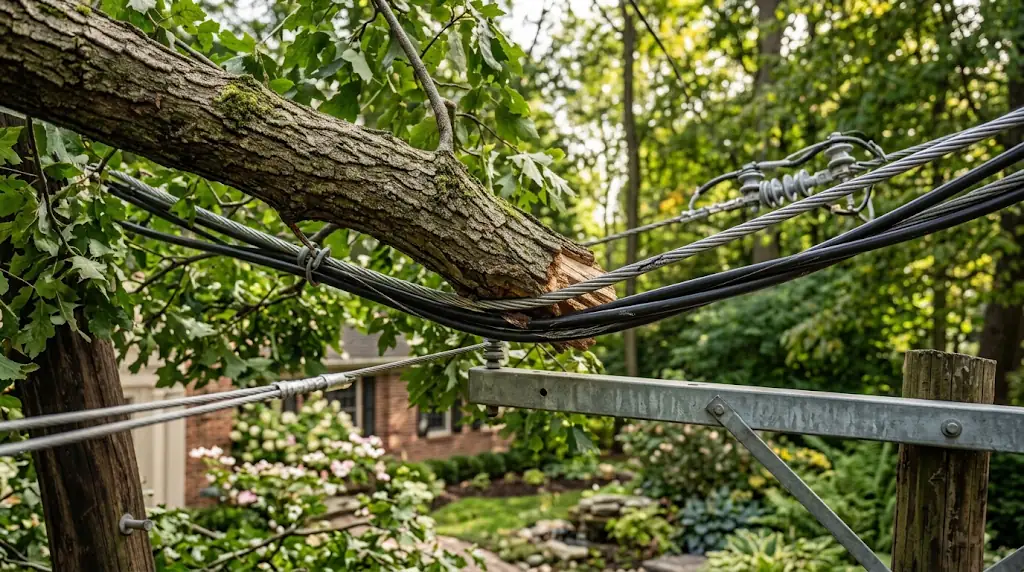
If a tree falls on power lines in Carmel, Indiana, immediately stay at least 30 feet away, call 911 if there is sparking or immediate danger, and report the hazard directly to Duke Energy at 800-343-3525. Do not touch the tree, limbs, or any nearby fencing, because electricity travels through wood, wet soil, and metal.
Severe thunderstorms, heavy wet snow, and high winds across Hamilton County frequently drop mature limbs and whole trees across electrical infrastructure. Because live high-voltage wires carry lethal electric current, knowing who to call, who is financially responsible, and how utility crews clear the lines will keep you safe and prevent severe property damage.
Immediate Danger: The 4 Steps to Take Right Away
When a tree or limb contacts power lines, treat the entire area as fully energized and lethal.
- Evacuate the Drop Zone: Keep yourself, family members, and pets at least 30 feet away from the downed lines and any branches touching them. If the ground is damp or standing water is present, increase that distance.
- Never Touch Surrounding Objects: Wet wood, chain-link fences, guardrails, and even dry turf can conduct high-voltage electricity. Never attempt to cut or pull branches off a line yourself.
- Call Emergency Services: If the line is arcing, smoking, throwing sparks, or threatening a home or vehicle, dial 911 immediately to dispatch the Carmel Fire Department to secure the perimeter.
- Notify the Electric Utility: Report downed or tangled power lines directly to the Duke Energy Overhead Power Lines Emergency Line at 800-343-3525.
Vehicle Safety Rule: If a power line falls across your car while you are inside, remain in the vehicle. The rubber tires insulate the car. Call 911 and wait for utility line workers to de-energize the line before exiting. If the car catches fire, jump clear of the vehicle with both feet together without touching the car and the ground at the same time, then bunny-hop away.
Who Is Responsible for Clearing the Tree?
Responsibility for clearing timber off power lines depends on whether the damaged wire is a primary distribution line or an individual residential service drop.
| Line Type | Description | Who Cuts the Tree? | Financial Responsibility |
| Primary Distribution Lines | High-voltage lines running pole-to-pole along streets and rear easements. | Utility Line-Clearance Crews (Contracted by Duke Energy) | Duke Energy |
| Secondary Service Drop | Lower-voltage line running from the utility pole directly to your electric meter. | Private Tree Removal Contractor (after line is de-energized) | Property Owner |
| Communication Cables | Low-hanging telephone, fiber-optic, and cable TV lines. | Cable/Telecom provider or Private Contractor | Property Owner / Telecom Carrier |
1. Primary Distribution Lines (Pole-to-Pole)
Primary power lines carry high voltage from local substations down major Carmel thoroughfares—such as Keystone Parkway, Main Street, and Range Line Road—and through dedicated utility easements behind residential lots.
- Utility Jurisdiction: Private tree companies and homeowners are strictly prohibited from working near active primary lines.
- The Utility’s Scope of Work: Utility crews from Duke Energy will cut away only enough timber to free the lines, replace snapped poles, and restore electrical power.
- The Homeowner’s Cleanup Responsibility: Utility line crews are emergency responders, not landscapers. Once they cut the branches off the wires, they leave the wood rounds, branches, and debris piled on your property. Hauling the remaining wood, chipping limbs, and grinding the stump is the homeowner’s responsibility.
2. Service Drops (Pole-to-House Lines)
The line that stretches from the utility pole to the weatherhead on your roof or electric meter box is your residential service drop.
- Homeowner Maintenance Duty: Under Duke Energy Tree Pruning Guidelines, property owners are primarily responsible for keeping vegetation clear of their private service lines.
- Safe De-Energizing: If a heavy branch rests on your service drop, do not try to saw it off while the line is live. Contact Duke Energy to temporarily disconnect or de-energize the service line at the pole. Once the line is cold, a licensed private tree service can safely rig and drop the timber.
3. Communication and Internet Lines
Often, a fallen tree limb pulls down the lower cluster of black wires running between poles. These are typically low-voltage communication lines (coaxial cable, telephone, or fiber-optic lines) managed by providers like AT&T, Comcast Xfinity, or Metronet.
- While these wires carry lower voltages than electric cables, they can become energized if they touch a damaged power line upstream.
- Always treat downed telecommunication cables as live electrical conductors until verified by emergency personnel.
Who Pays for Property and Equipment Damage?
When a falling tree tears down power lines, it often damages secondary infrastructure on the house. Financial responsibility breaks down as follows:
- The Weatherhead and Meter Base: If the falling tree rips the metal conduit pipe (weatherhead) or the electric meter base off the side of your house, the electric utility will not repair it. In Indiana, the homeowner owns the meter socket and riser pipe. You must hire a licensed electrician to rebuild the mounting assembly and pass municipal inspection before Duke Energy will reconnect service.
- Homeowners Insurance Coverage: If a falling tree damages your home’s roof, gutters, or attached electrical service mast, your homeowners insurance policy generally covers the structural repairs and emergency tarping, subject to your policy deductible.
- Power Outage Spoiled Food: Standard homeowner policies often include limited reimbursement (typically $250 to $500) for food spoilage caused by extended utility outages resulting from off-premises line damage.
Local Regulations and Street Trees in Carmel
If a street tree located in the public strip between the curb and sidewalk drops limbs across power lines or roadways, specific city protocols apply:
- Municipal Street Trees: Public right-of-way trees are monitored by the Carmel Urban Forestry Division. While utility crews handle the electrical hazard first, report downed street trees to the Carmel Street Department to coordinate timber clearing from public thoroughfares.
- Underground Utility Marking for Stumps: If a tree falling on a power line uproots completely, the root ball must eventually be ground down or extracted. Before operating stump grinders or backhoes, Indiana law mandates filing a ticket with Indiana 811 at least two business days prior to verify that underground gas, water, or buried secondary power feeds remain intact.
Safe, Professional Tree Clearing in Carmel
Never hire an uncertified, uninsured handyman to handle trees near power lines. Tree removal involving electrical infrastructure demands trained personnel with specialized non-conductive rigging, bucket trucks, and commercial liability protection.
If a storm has dropped a tree near your lines or left damaged limbs hanging over your home, reach out to Carmel Tree Removal via our Contact Page for emergency tree clearing and safe hazard removal.