In Indiana, the property owner whose land or structure sustains the damage is responsible for filing the insurance claim and paying for cleanup, regardless of where the tree’s trunk originally stood. The only exception occurs when the tree owner knew the tree was dead or hazardous prior to the collapse, which shifts legal liability to them under state negligence laws.
Severe summer squalls and winter ice storms regularly topple mature canopies across Carmel neighborhoods like Brookshire, Springmill Crossing, and Mohawk Crossing. When a neighbor’s tree crashes across your fence, driveway, or roof, assigning financial responsibility comes down to Indiana property law, insurance rules, and whether the fall was an unavoidable natural event or provable neglect.
Responsibility Breakdown: Act of God vs. Negligence
Indiana common law distinguishes sharply between unavoidable natural occurrences and property owner negligence.
| Scenario | Primary Financial Responsibility | Who Pays the Deductible? | Governing Legal Rule |
| Healthy Tree Falls in Severe Storm | The owner of the property where it landed | Damaged Property Owner | “Act of God” Common Law |
| Known Dead/Diseased Tree Falls | The owner of the property where the trunk grew | Tree Owner (or their liability carrier) | Indiana Negligence / Tort Law |
| Tree Falls Across Yard (No Damage to Structures) | Each owner clears their own side of the line | Each pays out of pocket (typically no insurance) | Boundary Line Allocation |
| Boundary Tree (“Straddler”) Falls | Joint responsibility (50/50 split) | Shared between both owners | Tenancy in Common / Joint Ownership |
| Tree Falls Into Public Road / Street | Tree owner / City of Carmel Street Department | Responsible party or municipality | Carmel City Code Section 6-55 |
1. The General Rule: “Act of God” and Weather Events
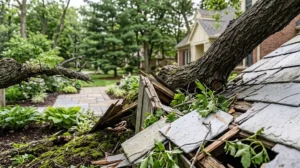
When high winds, microbursts, tornadoes, or heavy ice storms blow down a healthy, living tree, Indiana law categorizes the collapse as an “Act of God.”
Under this standard:
- The tree owner is not at fault. A property owner cannot prevent sudden, unpredictable severe weather from bringing down sound timber.
- Insurance follows the damage, not the trunk. If your neighbor’s healthy sugar maple lands on your garage, your homeowners insurance policy covers the structural repairs and debris removal on your parcel.
- You pay your deductible. Your insurance carrier will not attempt to collect money from your neighbor’s insurer because no civil wrongdoing occurred.
2. The Negligence Exception: When the Neighbor Must Pay
A tree owner is legally responsible for third-party property damage if they exhibited negligence. In Indiana, proving negligence requires showing that the tree owner had actual or constructive knowledge that the tree was dead, rotting, or structurally compromised, yet failed to remove it.
Warning Signs of Legal Negligence
- Advanced infestation by the Emerald Ash Borer with peeling bark and brittle deadwood.
- Large dead limbs (“widow-makers”) hanging suspended in the canopy for months.
- Significant trunk cavities, heart rot, or large fungal conks at the root flare.
- A severe, visible lean toward a neighbor’s structure that developed rapidly.
How Subrogation Works
If your insurer pays your repair claim and reviews evidence that your neighbor ignored a known hazard, your carrier will initiate subrogation. During subrogation, your insurance company sues or demands reimbursement from your neighbor’s liability insurer. If successful, your insurer recovers their repair costs and reimburses your deductible.
3. What Happens When a Tree Falls Without Hitting a Structure?
Homeowners insurance policies are designed to cover sudden structural damage, not general landscaping cleanup.
- Fallen on Bare Turf: If a neighbor’s healthy tree blows over and lands entirely on your open grass without damaging your home, garage, outbuilding, or fence, standard homeowners insurance rarely pays for debris removal.
- The Cut-at-the-Line Rule: Legally, the portion of the trunk and branches lying on your property is your responsibility to cut and remove. The portion resting on your neighbor’s property is theirs to clear.
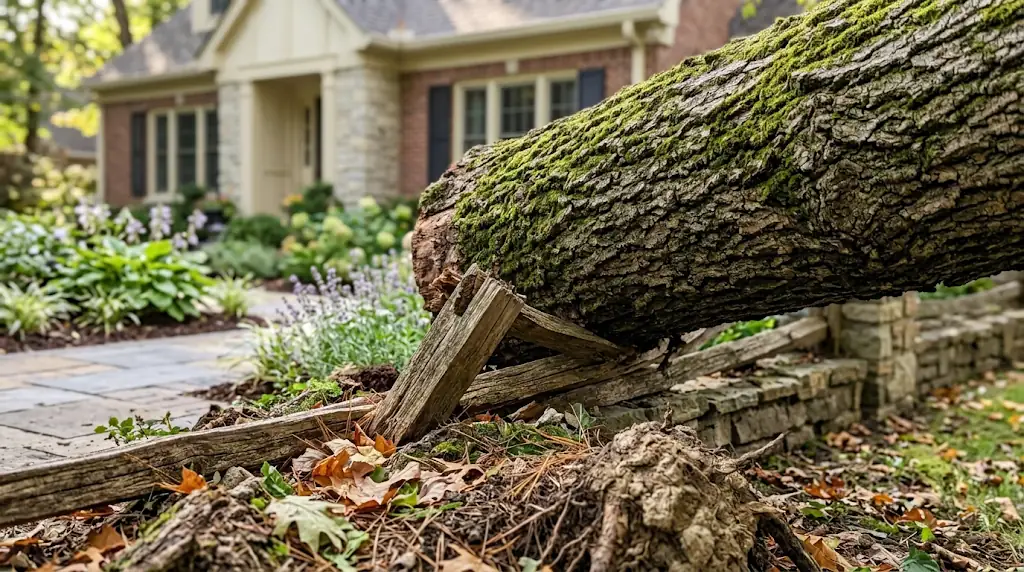
- Fence Damage Exception: Boundary fences are covered under standard “Other Structures” (Coverage B) insurance provisions. If a falling trunk crushes a shared fence, insurance generally pays to rebuild the damaged sections, subject to your policy’s deductible.
4. Carmel Municipal Code Requirements for Fallen Wood
The City of Carmel enforces strict local property maintenance standards under its municipal code. Leaving a fallen tree on your property indefinitely can trigger city citations.
Under Carmel City Code Section 6-88 and Code Enforcement regulations:
- 30-Day Cleanup Window: Fallen trees, slash, severed tree limbs, or other tree debris cannot remain on the ground on any residential premises for more than 30 days.
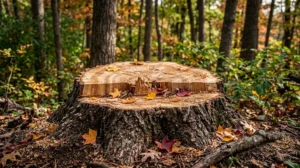
- Stump Heights: Leftover stumps exceeding 12 inches in height above ground level cannot remain on the premises for more than 30 days after cutting (unless the property is one acre or larger).
- Public Right-of-Way Obstructions: Under Carmel Code Section 6-55, any tree or limb likely to fall on or across a public street or sidewalk must be cleared by the owner of the premises where the tree stands. If a fallen tree blocks a public road or sidewalk, the city will clear the right-of-way portion immediately and may bill the tree owner.
5. What to Do Immediately After a Tree Falls
Take these four steps to protect your insurance claim and establish a clear timeline:
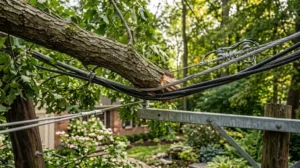
- Prioritize Safety First: Check for downed power lines. If electric lines are involved or sparking, stay back and report the hazard immediately to Duke Energy (800-343-3525).
- Document Everything Before Moving Debris: Take clear, comprehensive photos and video from multiple angles. Capture the base of the trunk to document root rot or insect activity, the impact zone, and the boundary line markers.
- Notify Your Homeowners Insurance: File a claim promptly with your insurance provider. Send them your photographic records and note whether the neighbor had prior knowledge of the tree’s poor health.
- Hire an Insured Emergency Crew: Do not attempt to clear high-tension trunk wood under pressure with a residential chainsaw. Fallen trees store dangerous kinetic energy and can kick or roll unpredictably.
Professional Emergency Tree Clearing in Carmel
Clearing a fallen tree across property lines requires specialized rigging, heavy equipment, and precise execution to prevent further structural damage to homes and boundary fences. Always ensure your tree contractor holds active general liability insurance and workers’ compensation coverage before work begins.
If a storm has brought down a tree on your home, fence, or driveway, contact Carmel Tree Removal through our Contact Page for emergency tree clearing and hazardous timber removal.